Pixel classification
Use labeled areas to classify spectral pixels and inspect a predicted mask.
See Studio analysis →Multispectral vision
When color and shape are insufficient, additional wavelengths can reveal useful differences. Abraia helps teams inspect spectral data, label examples, develop models, and test application-specific workflows.
Explore the data
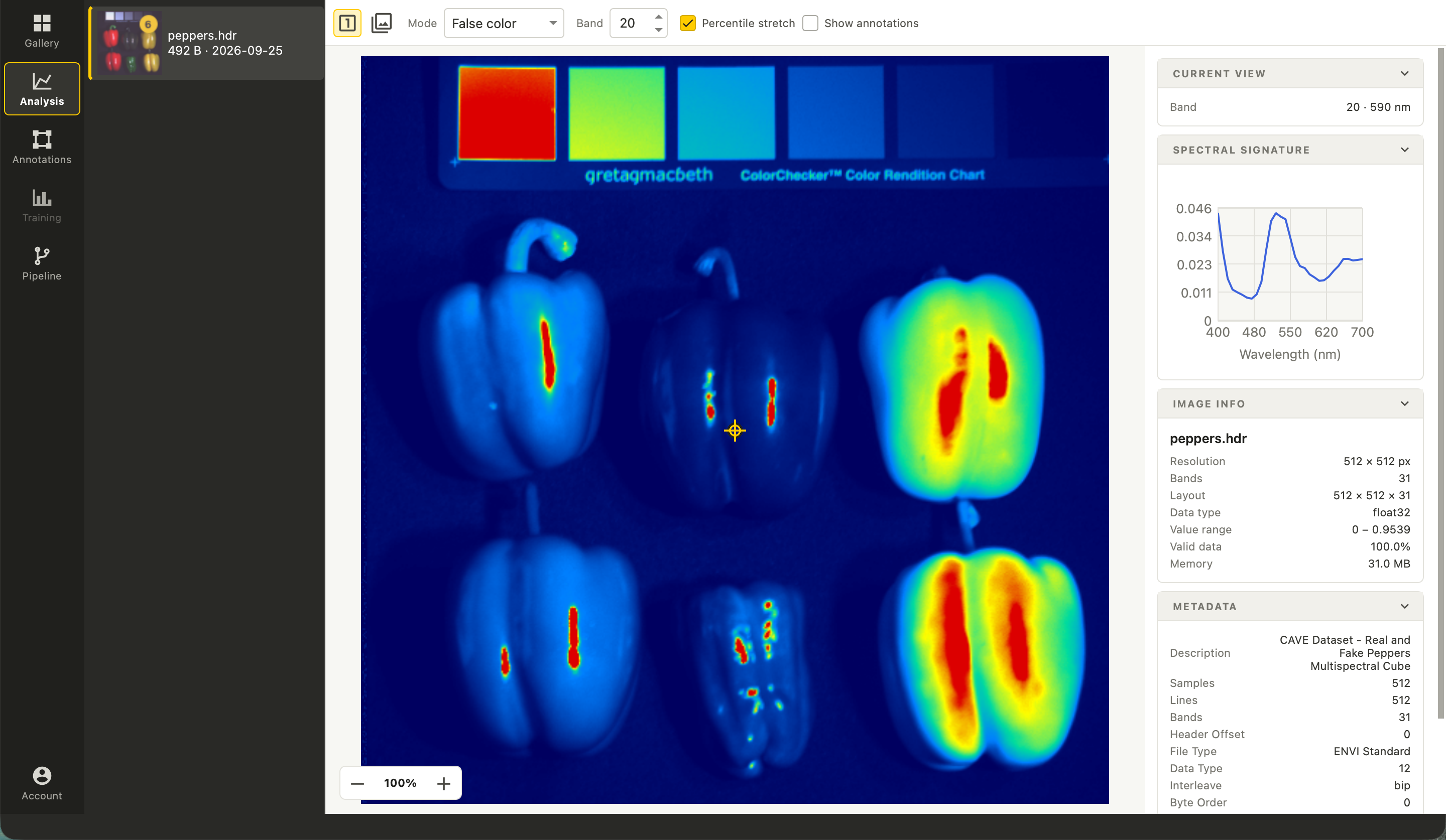
Open supported TIFF, ENVI, or IMEC scenes in Vision Studio. Compare true-color, false-color, single-band, PCA, and custom views; click pixels to inspect their spectra and review source metadata.
Spectral indices depend on wavelength metadata and the bands available in the source. A useful analysis begins by checking acquisition conditions and whether the signal separates the classes of interest.
Workflows
The right method depends on what must be predicted and how the data was annotated.
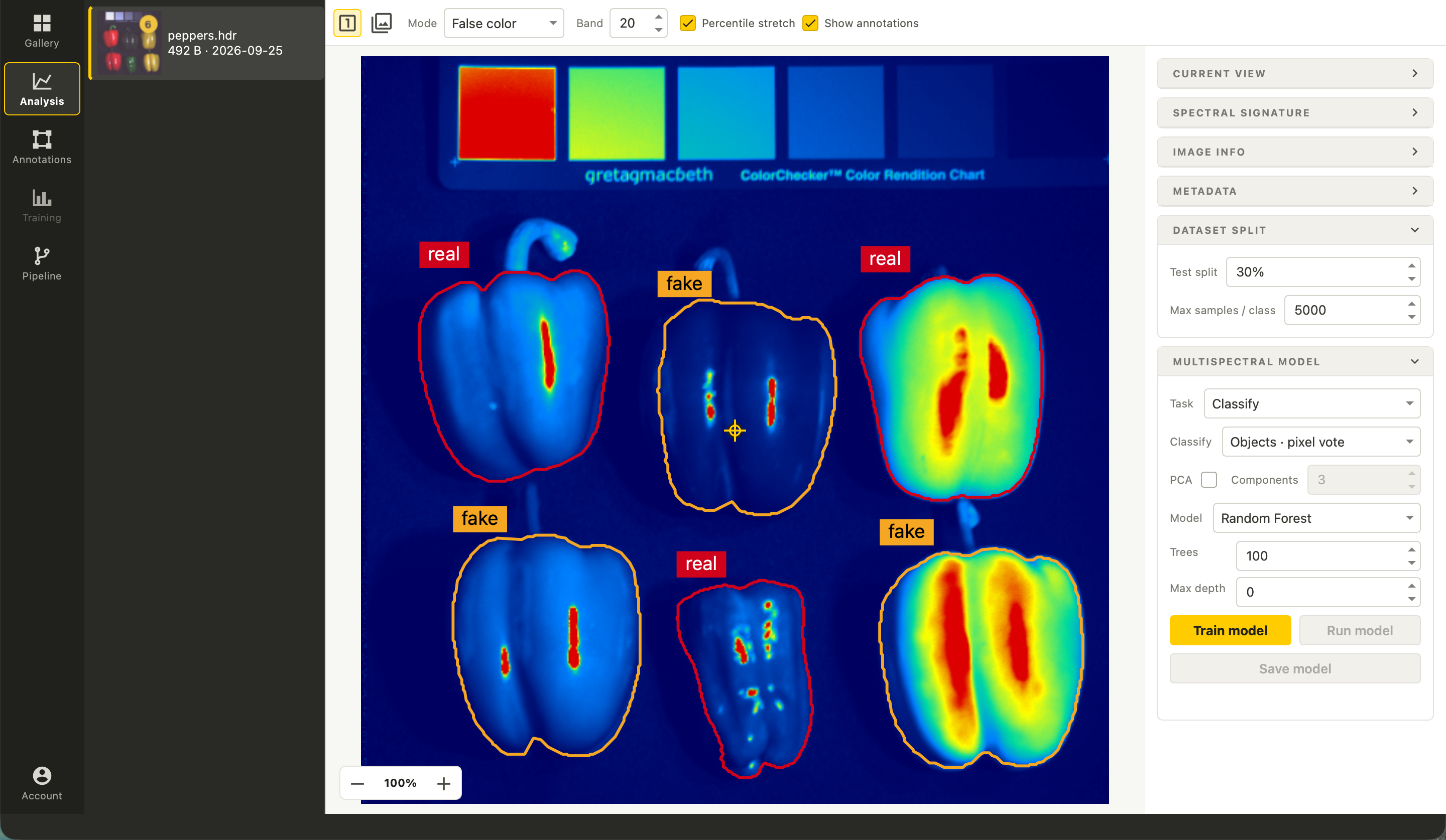
Use labeled areas to classify spectral pixels and inspect a predicted mask.
See Studio analysis →Predict a class or numeric target for an existing segmented object from its spectral data.
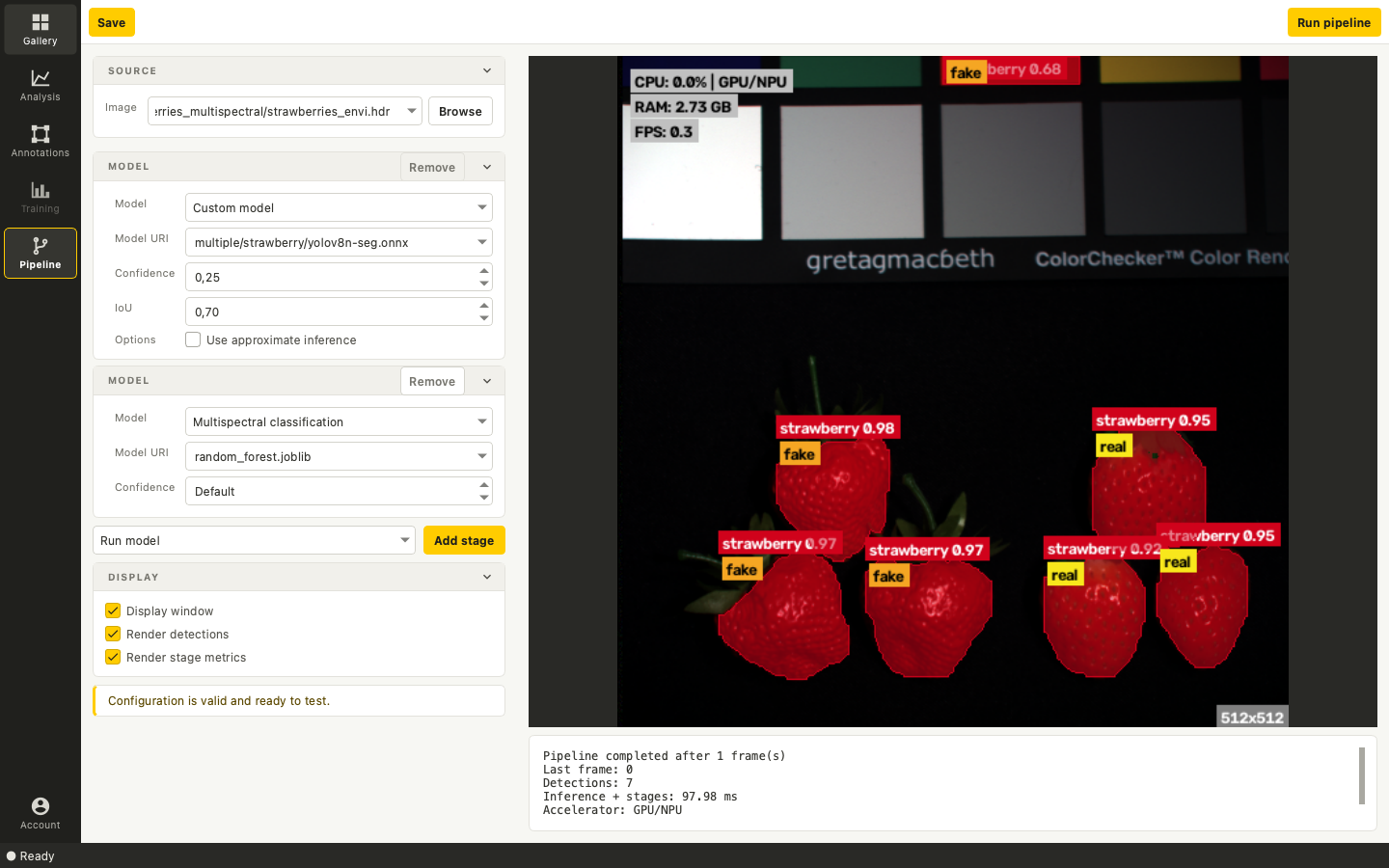
See Studio models →Locate objects in an RGB view, then classify their spectral crops in a later stage.
See the pipeline →Evidence
The Studio repository demonstrates a strawberries scene processed by instance segmentation followed by a spectral classifier that labels detected crops. A peppers scene demonstrates annotated object analysis across 31 bands.
These are examples of the workflow on specific datasets. A customer project needs its own sensor data, representative labels, and validation before a performance claim or deployment decision.
Applications
Spectral methods are worth evaluating when materials or conditions look similar in ordinary color images. Potential uses include produce inspection, plant monitoring, material sorting, and quality assessment. The feasible task depends on the sensor, wavelength range, illumination, and reference data.
For crop and produce examples, see computer vision in agriculture. For local camera systems, see embedded vision solutions.
Tell us about the images, sensor, operating environment, and decision you want the system to support. We can identify a practical first evaluation.