Train and curate
Prepare image datasets, review quality findings, annotate, and train classification, detection, or segmentation models.
Read SDK documentation →Developer toolkit
A Python toolkit for image processing, model training, inference, video pipelines, and edge deployment. Use it to turn a tested workflow into application code.
Capabilities
The SDK supports both ready-made model workflows and custom development.
Prepare image datasets, review quality findings, annotate, and train classification, detection, or segmentation models.
Read SDK documentation →Use model inference with video, tracking, counting, region timing, and configurable ordered pipelines.
Explore runtime tools →Run compatible ONNX models and compile supported detection or segmentation checkpoints for Hailo targets.
Explore deployment →Studio and SDK
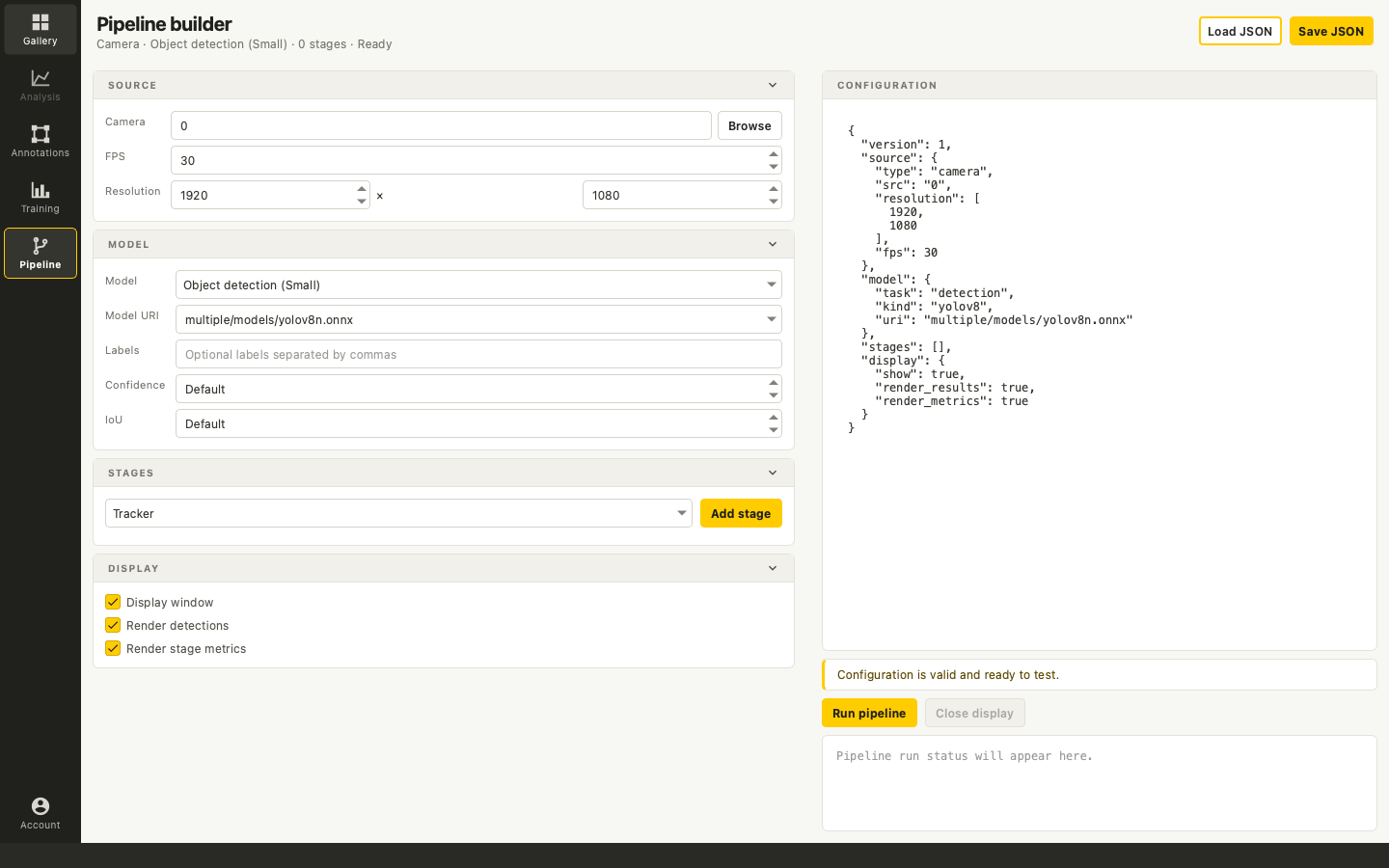
Vision Studio is the desktop workbench for dataset review, annotation, spectral analysis, training, and pipeline previews. The SDK gives developers Python APIs and a command-line interface for custom applications.
Install the package with pip install -U abraia. Some models and hardware targets need optional dependencies. Studio also works with multispectral and hyperspectral scenes; explore multispectral imaging solutions.
Face recognition
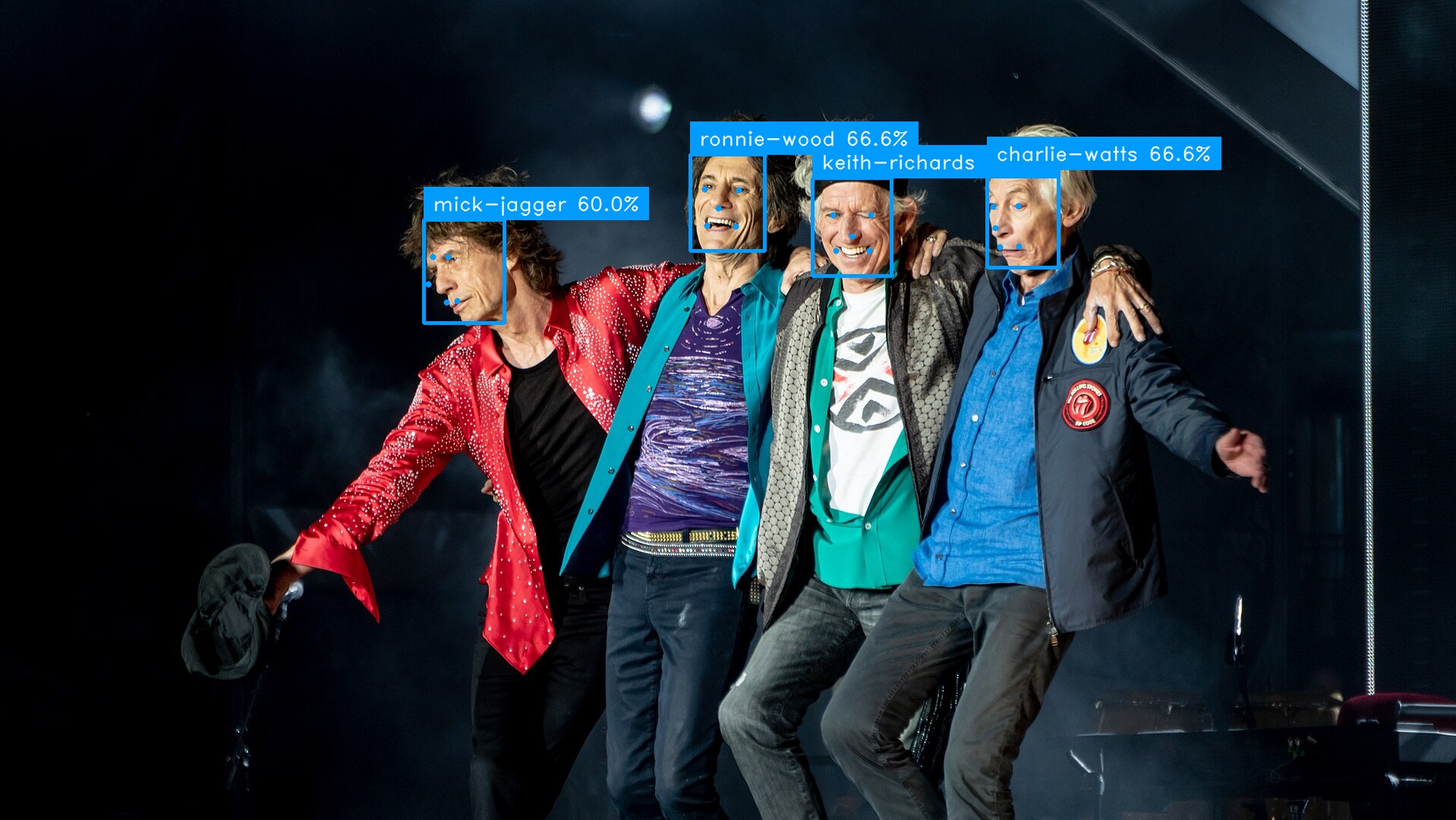
The SDK includes face representation and identification for matching faces against a reference set in images or video. The application still needs enrollment, evaluation on representative footage, and integration designed for its setting.
See the current SDK documentation and examples for API details. For people counting without identification, see queue monitoring.
Tell us about the images, sensor, operating environment, and decision you want the system to support. We can identify a practical first evaluation.